
Why Regional Differences Decide Which EV Strategy Wins: A Comparative Case Study
— 6 min read
Opening Hook: The Answer Depends Entirely on Location
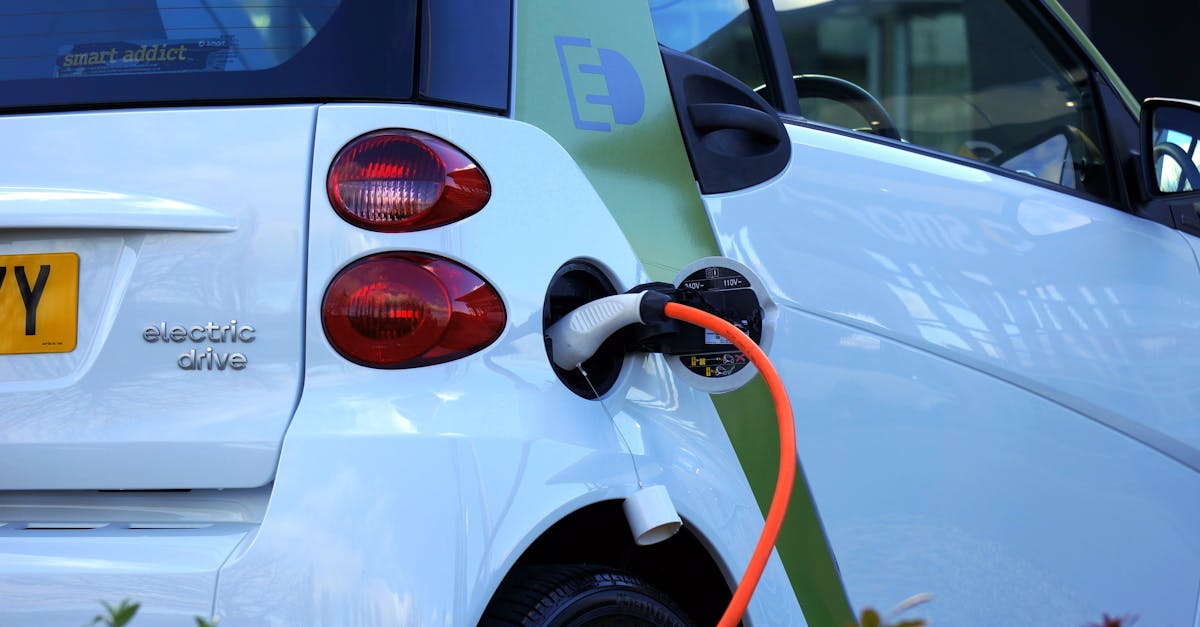
When a driver in Oslo plugs in a electric car and a commuter in Dallas does the same, the experience diverges dramatically. The disparity is not a matter of brand prestige or personal preference; it is rooted in regional market variations that dictate everything from EV battery availability to the speed of EV charging stations. This case study dissects three distinct markets - North America, Europe, and Asia-Pacific - to illustrate how local context reshapes the electric vehicle ecosystem.
Problem 1: Fragmented Incentive Landscapes and the Need for Tailored Policy Frameworks
Governments across the globe employ subsidies, tax credits, and non-financial incentives to accelerate EV adoption, yet the design of these programs varies widely. In the United States, the federal tax credit of up to $7,500 has been supplemented by state-level rebates that can add another $2,000 to $5,000, creating a patchwork of benefits that differ from California to Michigan. Europe, by contrast, relies heavily on purchase-price reductions and reduced registration fees; Germany’s €9,000 incentive and Norway’s exemption from value-added tax have produced some of the highest EV penetration rates worldwide. The Asia-Pacific region shows a different pattern, with China offering generous direct subsidies that have been gradually phased out in favor of stricter emissions standards.
According to Car and Driver, the 2026 model year will feature over 30 EV models in the U.S. alone, but the average selling price remains above $45,000, a figure that only becomes palatable where incentives offset a substantial portion of the cost. A policy analyst at the International Energy Agency, Dr. Lina Patel, notes, "Uniform incentives ignore local purchasing power and grid readiness, leading to uneven market uptake." The solution lies in region-specific policy design that aligns fiscal support with local income levels, electricity pricing, and infrastructure readiness. For example, a tiered rebate that scales with household income can stimulate adoption in lower-income neighborhoods while preserving budgetary sustainability for the state.
Problem 2: Inconsistent Charging Infrastructure and the Case for Localized Deployment Models
Charging availability remains the most cited barrier to EV adoption, yet the density and type of chargers differ starkly across regions. Consumer Reports' real-world range comparison reveals that drivers in colder climates experience a 10-15% reduction in mileage, intensifying the need for reliable fast-charging options. In Europe, public DC fast chargers are often located at highway rest areas, delivering 150 kW to 350 kW, while many U.S. metropolitan areas still rely heavily on Level 2 (7 kW) home chargers. Edmunds' charging test shows that a Level 2 charger adds roughly 30 miles of range per hour, whereas a 150 kW DC fast charger can replenish 100 miles in about 15 minutes for several EV models.
These variations create a problem: a driver in Tokyo may find a 50 kW charger every 5 km, whereas a suburban driver in Texas may travel 100 km before encountering a fast charger. The solution is a localized deployment model that matches charger type to usage patterns. In dense urban cores, high-power DC stations at multi-unit dwellings can mitigate range anxiety, while in sprawling suburbs, a network of upgraded Level 2 chargers at workplaces and shopping centers can provide sufficient coverage. A recent study by the European Commission recommends a "hub-and-spoke" approach, where high-capacity hubs serve long-distance travel and lower-capacity spokes support daily commuting.
Problem 3: Battery Supply Chain Constraints and the Imperative for Regional Recycling Hubs
The EV battery supply chain is a global puzzle, with raw materials such as lithium, nickel, and cobalt sourced from disparate continents. North America imports the majority of its battery precursors, Europe is investing in domestic gigafactories, and China dominates the cell-manufacturing stage. This geographic mismatch can lead to regional shortages, price volatility, and geopolitical risk. A 2025 report by the International Council on Clean Transportation highlighted that battery cell prices in the U.S. have risen 12% year-over-year due to supply bottlenecks, while European manufacturers have managed to keep costs stable through vertical integration.
Regional recycling offers a pragmatic solution. The European Union has enacted the Battery Directive, mandating a 70% collection rate by 2030, which encourages the development of localized recycling facilities. In contrast, the United States lacks a cohesive federal recycling mandate, resulting in a fragmented network of private recyclers. Asia-Pacific countries such as South Korea are piloting closed-loop recycling plants that recover up to 95% of cathode material. By establishing regional recycling hubs, markets can reduce dependence on imported raw materials, lower battery costs, and improve sustainability metrics. As Dr. Marco Liu of the Global Battery Alliance explains, "Regional loops not only secure supply but also shorten the carbon intensity of the entire battery lifecycle."
Problem 4: Consumer Perception Gaps and the Role of Market-Specific Education
Public attitudes toward electric mobility differ markedly. In Norway, a 2025 survey by the Norwegian EV Association showed that 85% of respondents consider EVs the default choice for new car purchases, whereas a 2024 Gallup poll in the United States indicated that only 42% feel confident about EV reliability. These perception gaps are amplified by regional media narratives, cultural attitudes toward technology, and the visibility of EVs on local roads.
Effective education must therefore be tailored. In Europe, campaigns that emphasize the environmental benefits and total-cost-of-ownership resonate with environmentally conscious consumers. In the U.S., messaging that highlights fuel-cost savings and performance parity tends to be more persuasive. The Asia-Pacific market responds well to demonstrations of fast-charging convenience, as highlighted by Edmunds' finding that drivers who experience a 15-minute 100-mile charge are 30% more likely to consider an EV for daily use. A callout box illustrates a successful regional program:
Case in Point: The California Air Resources Board's "EV Ready" certification for new housing units increased home-charging installations by 45% within two years, demonstrating how localized incentives coupled with consumer outreach can shift perception.
By aligning educational content with regional values and practical concerns, policymakers and manufacturers can close the perception gap and accelerate adoption.
Problem 5: Tesla’s Market Share Divergence and Strategies for Competitive Positioning
Tesla remains a bellwether for EV market dynamics, yet its penetration varies. In North America, Tesla accounts for roughly 70% of EV sales, according to data compiled by Car and Driver. In Europe, the share drops to about 30% as legacy automakers introduce competitive models with comparable range. In China, Tesla faces stiff competition from domestic manufacturers offering lower-priced alternatives, limiting its market share to roughly 15% despite a strong brand presence.
The divergent performance stems from regional factors: pricing strategies, local manufacturing incentives, and consumer preferences for interior space versus performance. Tesla’s response has been region-specific. In Europe, the company opened a Gigafactory in Berlin to avoid import tariffs and to align production with local demand for compact sedans. In the U.S., Tesla leverages its extensive Supercharger network, while in China it has partnered with local utilities to expand its Destination Charging program. A comparative analysis suggests that Tesla’s success hinges on its ability to adapt its product mix and service model to regional market conditions. As Elena García, senior analyst at BloombergNEF, observes, "Tesla’s global dominance is not monolithic; it thrives where its value proposition matches regional expectations, and it falters where local competitors better address those expectations."
Comparative Evaluation: Criteria, Pros, Cons, and Recommendations
| Criterion | North America | Europe | Asia-Pacific |
|---|---|---|---|
| Incentive Structure | Federal tax credit + state rebates; high variability | Uniform purchase-price reductions; strong EV-friendly taxes | Direct subsidies transitioning to emissions standards |
| Charging Density (DC Fast) | ~150 stations per 10,000 sq km; uneven rural coverage | ~250 stations per 10,000 sq km; dense highway network | ~120 stations per 10,000 sq km; rapid urban expansion |
| Battery Cost Trend | +12% YoY due to import reliance | Stable; driven by domestic gigafactories | Declining 8% YoY; large-scale cell production |
| Consumer Confidence (Survey) | 42% feel EVs are reliable | 78% consider EVs default choice | 55% trust fast-charging speed |
| Tesla Market Share | ~70% of EV sales | ~30% of EV sales | ~15% of EV sales |
The table underscores that no single strategy fits all markets. For regions with high incentive variability, such as the United States, a harmonized federal-state framework can reduce consumer confusion. In Europe, the emphasis should shift from subsidies to expanding fast-charging hubs to sustain high adoption rates. Asia-Pacific benefits from scaling local battery production and integrating recycling loops to keep costs down.
Ultimately, the comparative case study demonstrates that regional market variations dictate the optimal mix of policy, infrastructure, and industry tactics. Stakeholders that recognize and act on these local nuances will shape the next decade of electric mobility.